

Allergen Labelling on Food Labels: UK Compliance Essentials
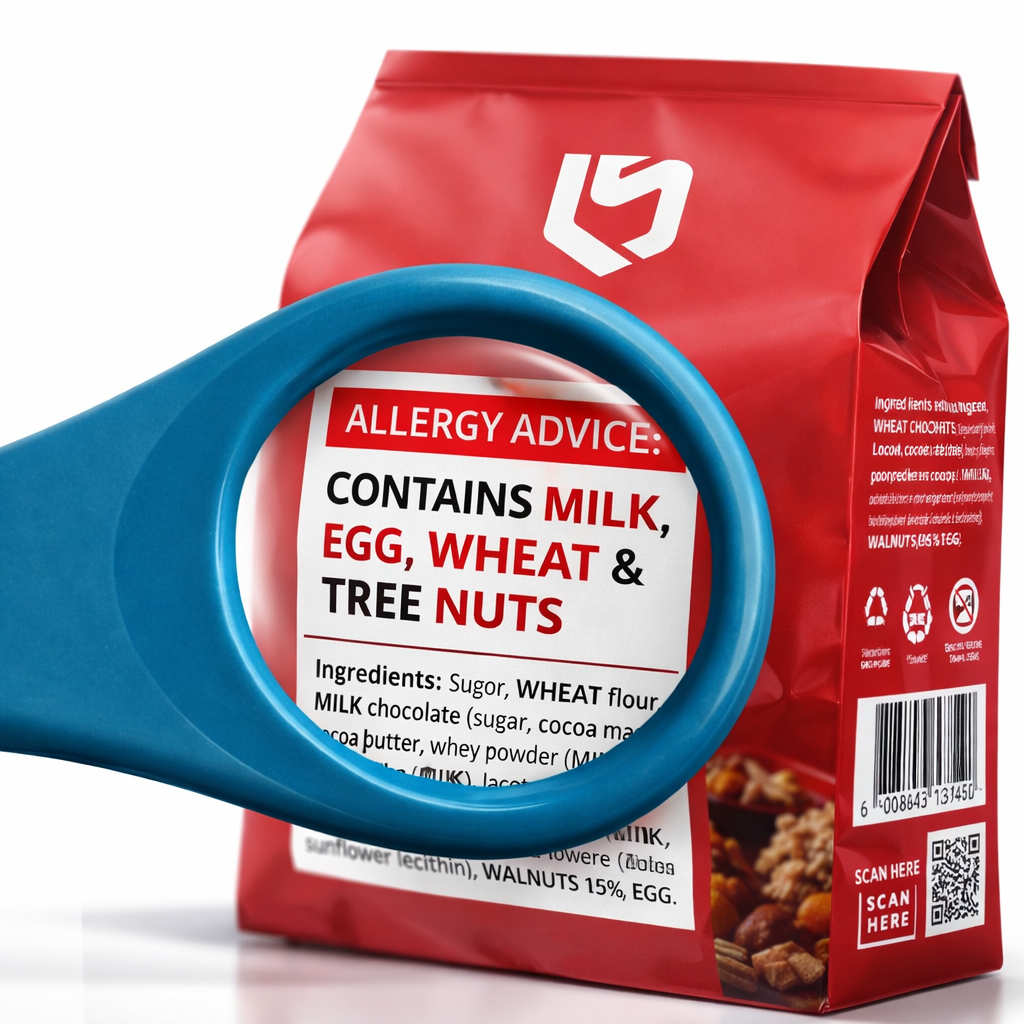
Allergen labelling is one of the most tightly enforced areas of UK food regulation. Errors are treated as direct consumer safety risks rather than technical breaches, which is why allergen-related recalls remain consistently high. For food brands, compliance is not limited to listing ingredients correctly. It also depends on how allergen information is presented, emphasised, and maintained as formulations and regulations evolve.
Under UK food law, allergen information must be clear, accurate, and immediately recognisable to consumers. Where labels fail to meet these standards, enforcement action can follow quickly, regardless of whether the error was unintentional.
The Legal Framework Governing Allergen Labelling
In Great Britain, allergen labelling requirements are set out under retained EU Regulation No 1169/2011 on food information to consumers, alongside UK-specific enforcement guidance. The rules require the clear declaration of 14 specified allergens whenever they are present as ingredients or processing aids. These allergens must be highlighted within the ingredients list, typically through bold type or another form of emphasis that distinguishes them from surrounding text.
The obligation applies to prepacked foods placed on the market and covers both retail and foodservice supply chains. Importantly, responsibility sits with the food business operator whose name appears on the label, not the printer or packaging supplier.
How Allergens Must Appear on Food Labels
Allergens must be declared using the name of the allergen as listed in legislation, not a derivative or informal description. For example, declaring “whey” without clearly identifying milk is not acceptable. Emphasis must be applied consistently across the ingredients list, and it must be easily visible without relying on colour alone.
Where no ingredients list is required, such as for certain beverages, allergens must still be declared using a clear “contains” statement. This requirement is often overlooked when products are reformulated or repositioned, leading to gaps between legal obligations and label content.
Space Constraints and Label Design Challenges
As ingredient lists grow longer and regulatory information increases, space on food labels becomes increasingly constrained. This is particularly true for small packs, multi-language labels, and products with complex formulations. Allergen emphasis cannot be reduced or obscured to save space. Font size, contrast, and placement all remain subject to legibility requirements.
When space becomes limiting, extended content label formats are often used to ensure allergen information remains compliant without removing other mandatory content. This allows brands to preserve clarity while accommodating evolving regulatory and formulation demands.
Managing Changes to Recipes and Suppliers
One of the most common causes of allergen labelling failures is change. Ingredient substitutions, new suppliers, or minor recipe adjustments can introduce allergens unexpectedly. If labels are not updated in parallel, products may be placed on the market with incomplete or misleading allergen information.
Effective allergen control therefore depends on strong internal processes. Packaging updates should be triggered automatically when formulation changes occur, even if the change seems minor. Relying on historical artwork or assuming equivalence between ingredients is a frequent source of non-compliance.
Precautionary Allergen Statements and Their Limits
Precautionary allergen labelling, such as “may contain,” is permitted in the UK but closely scrutinised. These statements must be based on genuine cross-contamination risk and cannot be used as a substitute for good manufacturing controls. Overuse or inconsistent application can attract regulatory attention and undermine consumer trust.
From a labelling perspective, precautionary statements add further pressure on space and clarity. They must not contradict mandatory allergen declarations or create ambiguity about whether an allergen is intentionally present.