

Food Labels Provide Clear Compost and Recycling Guidance to Match Simpler Waste Collection Systems
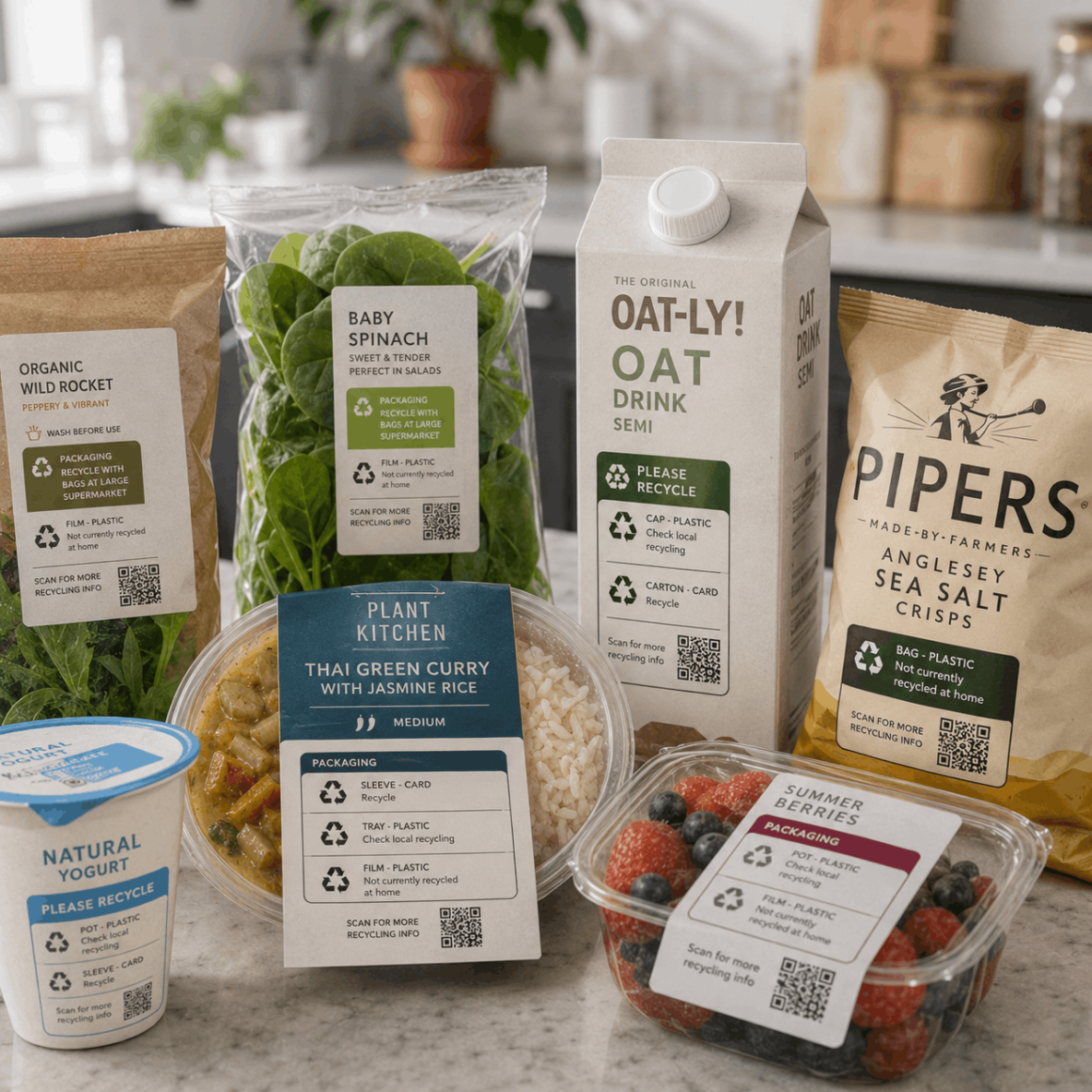
Simpler household waste collection systems are being introduced across the UK, with the aim of improving recycling rates and reducing contamination. As these systems become more standardised, the role of on-pack communication is becoming increasingly important. Food labels are now expected to provide clear, consistent disposal guidance that aligns with local infrastructure and national policy.
For many consumers, the label is the final point of contact before disposal. This makes it one of the most effective tools for influencing behaviour at exactly the right moment. Clear compost and recycling instructions can significantly improve sorting accuracy, while unclear or inconsistent messaging can undermine even well-designed waste systems.
How Food Labels Guide Correct Disposal
Food labels play a direct role in guiding consumer decisions. Simple, unambiguous instructions such as “Compost with food waste” or “Recycle at home — widely recycled” allow users to act quickly and confidently without needing to interpret complex information.
This clarity is essential in real-world conditions, where disposal decisions are often made in seconds. Labels that rely on vague language or unclear symbols increase the likelihood of mistakes, leading to contamination in recycling and composting streams.
Where additional explanation is required, extended content formats such as peel-and-reveal or booklet labels can be used. These allow brands to include more detailed guidance, including variations in local collection systems, without overcrowding the primary packaging.
The Standards Food Labels Must Meet
Food labels must comply with a combination of regulatory requirements, including food-contact safety rules, recyclability criteria, and the updated Green Claims Code. Any disposal or environmental claim made on-pack must be accurate, evidence-based, and aligned with actual waste management infrastructure.
This means that general or misleading statements are no longer acceptable. Claims must be supported by technical documentation, including recyclability assessments and material compatibility data. In addition, labels must not imply that a product is recyclable or compostable if the necessary facilities are not widely available.
Why Clarity Matters and Practical Next Steps
As simpler waste collection systems are rolled out, consistency becomes critical. Consumers need clear and reliable instructions that match what is actually collected in their area. When labels fail to provide this clarity, contamination rates increase, leading to higher processing costs and reduced recycling efficiency.
For producers, this creates both a compliance and a reputational risk. Poor labelling can result in regulatory scrutiny, while clear and accurate communication can strengthen consumer trust and support sustainability goals.
To prepare, brands should audit their current labelling against the latest disposal guidance, update wording to ensure it is specific and actionable, and verify that all claims are backed by evidence. Where space is limited, extended label formats should be considered to maintain clarity without compromising design.
If you produce or pack food products, clear and compliant labelling can make a measurable difference to waste outcomes. For food-grade label solutions designed to deliver effective disposal guidance and meet 2026 requirements, visit foodlabels.co.uk.